How to Prepare for a Tax Audit With Digital Receipts
Organize receipts and supporting records so you can explain reported income and expenses if a tax authority asks questions.

Alex Chen
Product Manager & Personal Finance Advocate
How to Prepare for a Tax Audit With Digital Receipts
If a tax authority asks about an expense, you need records that support the amount, date, business purpose, and any other facts required for that expense. Digital records can help when they remain complete, readable, and easy to retrieve; they do not guarantee that a deduction is allowed. Build a repeatable recordkeeping process before you receive a notice.
U.S. federal recordkeeping rules vary by record type and circumstance. The IRS generally says to keep records for as long as needed to support items on a return, often until the period of limitations expires. Different limitation periods can apply, and some records, such as basis records for property, may be needed longer. See IRS record-retention guidance rather than using one retention period for every file.
Key takeaways
- Keep records that support both income and expenses, including invoices, statements, receipts, and relevant notes.
- Store digital records in a way that preserves the information and allows it to be produced when needed.
- The required evidence depends on the type of expense; a receipt alone may not establish business purpose or eligibility.
- Retention periods depend on the tax item and circumstances.
- Keep asset records while they affect basis and after disposition as required.
- Organize files for retrieval, but do not treat a checklist, app, or receipt image as a guarantee against audit adjustments.
What to keep with an expense record
For each business expense, preserve the records that explain what happened. Depending on the expense, that may include:
- Amount and date: the receipt, invoice, card statement, or other source record.
- Seller or payee: enough detail to identify who received the payment.
- Business connection: a note, contract, calendar entry, or other record that explains the business purpose when it is not obvious.
- Expense-specific details: for example, attendees and purpose for a meal, or date, destination, purpose, and mileage for a business trip.
- Payment and reimbursement records: evidence that shows who paid and whether an employer or customer reimbursed the cost.
The exact documentation depends on the expense. For travel, gift, and transportation expenses, IRS Publication 463 describes the elements to substantiate and the role of timely records. Some listed expenses have strict substantiation rules. Incomplete records may sometimes be supported with a written statement and other evidence, but an unsupported estimate is not enough.
Store digital records carefully
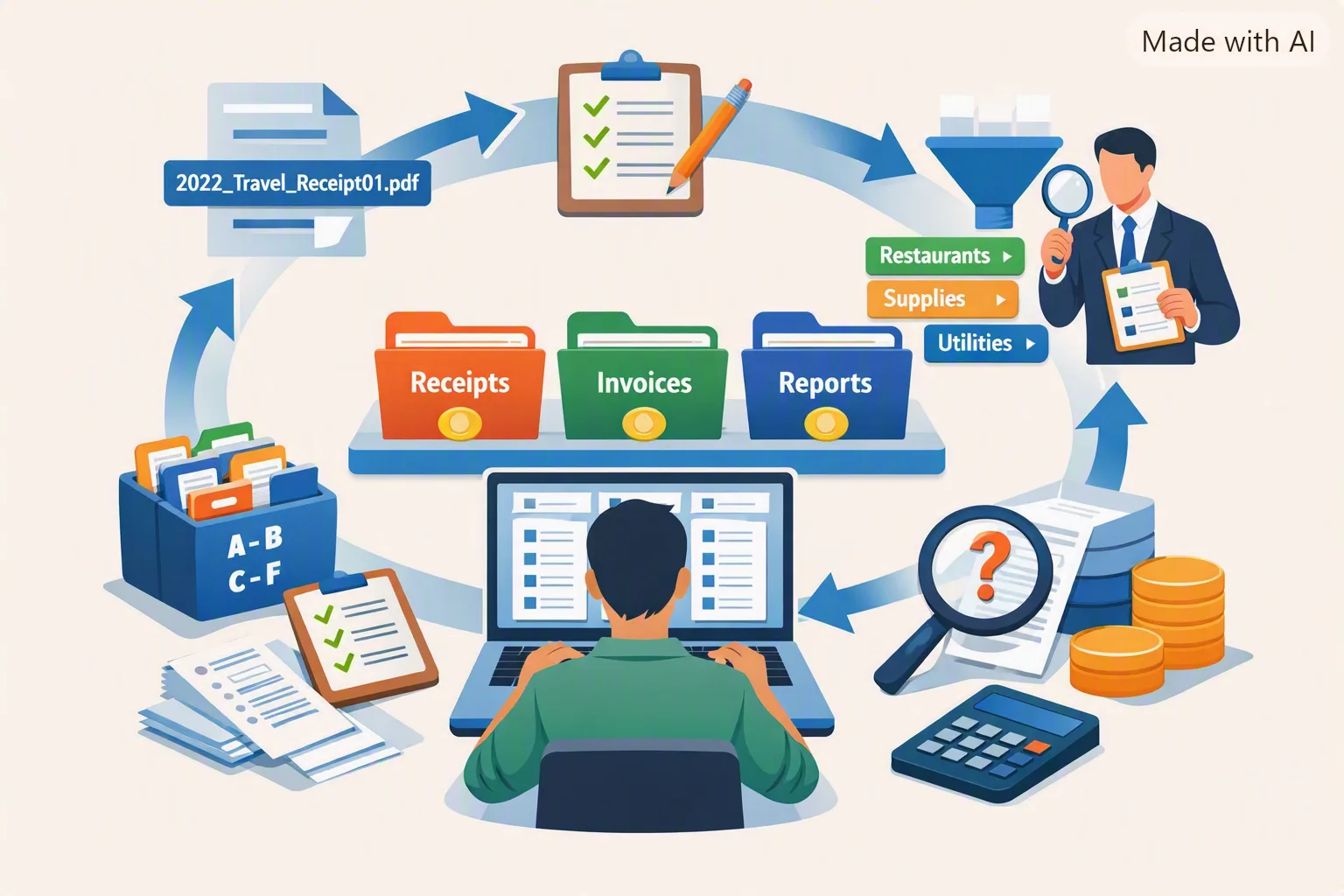
Use a consistent folder, database, or records system and keep the source image or file with related notes. Check that files open, remain readable, and can be retrieved by date, payee, and category. Keep backups under your normal records-management process.
The IRS permits electronic recordkeeping systems when they meet applicable recordkeeping requirements. See IRS Publication 583 for guidance on starting a business and keeping records. A digital copy should preserve the information needed to establish the transaction; scanning does not remove the need to retain supporting details.
Run a practical retrieval check
Periodically select a few records and confirm that you can locate:
The receipt, invoice, or statement that supports the amount. 2. Notes or other records that explain the business purpose where needed. 3. Any related contract, trip record, reimbursement, or payment evidence. 4. The tax year and account or category where the item was recorded.
If information is missing, add an explanatory note while the facts are still available and keep any corroborating records. Do not backdate a record or present a later reconstruction as contemporaneous.
Document review aid
Review information from a document
Open each section to see examples of fields a document may contain. The fields and extraction results vary by document.
- Merchant or issuer
- Document date
- Currency
These are examples to review. They are not accuracy ratings or guarantees.
Know that audit selection and recordkeeping are different
No expense ratio, business type, or recordkeeping app can predict whether a return will be examined. The IRS does not publish a simple checklist that guarantees avoiding an audit. If you receive a notice, read the scope and deadline, gather the requested records, and respond through the method stated in the notice. A tax professional can help when the request is complex or the proposed adjustment is significant.
Tip
An image is easier to use when the transaction record also explains why the cost relates to the business. Save the details that are not obvious from the receipt.
Keep receipt records organized
Yomio helps capture and organize receipt records. Keep any extra notes and supporting documents needed to explain the business purpose and tax treatment.
Organize Receipts