Debt Snowball vs Debt Avalanche: How to Compare Repayment Methods
Compare debt repayment orders, understand how interest and payoff timing can differ, and use your own balances and terms to test a scenario.

Yulia Lit
Consumer Psychology & Behavioral Economics Researcher
Debt Snowball vs Debt Avalanche: How to Compare Repayment Methods
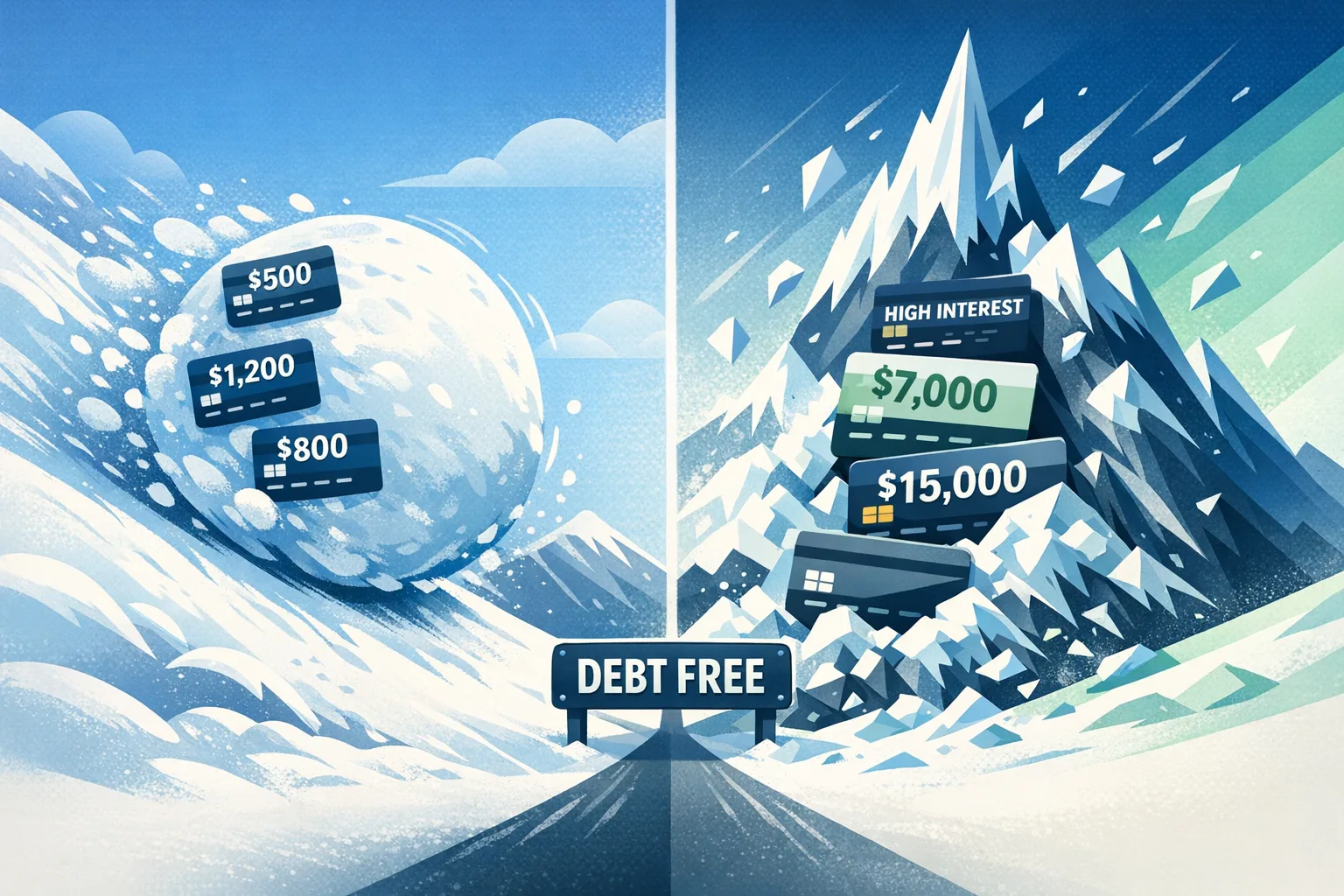
The debt avalanche directs extra payments to the highest-interest balance first and generally reduces interest when rates, fees, minimum payments, and terms stay as entered. The debt snowball directs extra payments to the smallest balance first, which can close an account sooner but may cost more interest. List each balance, rate, minimum, fee, and available extra amount, then choose an order you can maintain. The Consumer Financial Protection Bureau explains both methods and provides a debt reduction worksheet.
Neither order changes the required minimum payment or your account terms. Keep each account current and check lender statements for rate changes, fees, promotional periods, and how extra payments are applied.
How the debt snowball works
The snowball orders balances from smallest to largest, regardless of interest rate. Continue paying the required minimum on every account, then put any additional amount you can afford toward the smallest balance. When it is paid, redirect that payment to the next-smallest balance. This method focuses on closing a smaller account first; it does not guarantee a lower total cost or that a person will continue the plan.
How the debt avalanche works
The avalanche orders debts by interest rate, from highest to lowest. Continue paying the required minimum on every account and direct available extra money to the highest-rate balance. When it is paid, redirect that payment to the next-highest rate. When rates, fees, minimums, or terms differ, enter the current details before comparing scenarios.
Tip
Both methods assume that you continue to meet the required minimum payment on every debt. Check your statements and lender terms before sending extra payments.
Compare the methods with your own numbers
The order affects the result in relation to your balances, interest rates, fees, minimums, and extra payment amount. A calculator can illustrate a scenario using the values you enter, but it cannot predict future rate changes, fees, or lender decisions.
Calculator
Debt Snowball vs Avalanche — Your Numbers
Add your debts below to see exactly how each method performs with your specific balances and interest rates.
Review the inputs before relying on an estimate. If an account has a promotional rate, variable rate, prepayment charge, or special payment rule, check the current agreement and include relevant terms in your comparison. For U.S. federal student loans, the Department of Education's repayment calculator can compare available repayment plans; it is separate from the snowball and avalanche ordering discussed here.
Warning
Use only money available after essential costs and required payments. If your circumstances change, revise the plan instead of missing a required payment.
Which method might fit your priorities?
The avalanche may fit if lowering interest cost is your main priority and you can keep paying toward a balance that may take longer to clear. The snowball may fit if closing a smaller account first helps you follow the plan, and you accept that the total interest could be higher. A hybrid approach is also possible: pay one small balance first, then switch to the highest-rate order. The added cost of a hybrid depends on the balances, rates, payment amounts, fees, and timing.
There is no single order that works best for every debt profile or budget. Compare the account terms and choose a plan that still leaves room for essential expenses. If you are struggling to make payments, contact the lender about current options or seek help from a qualified nonprofit credit counselor.
Information
Some people prefer seeing a small balance disappear first, while others prioritize reducing interest. Neither method guarantees motivation or completion; use your own budget and preferences to choose.
Mistakes to avoid
Do not stop paying required minimums on other accounts while focusing extra money on one debt. Do not assume that an extra payment will be applied to the balance you intended; check the lender's payment instructions. Review your plan when a rate, fee, promotional offer, income, or essential expense changes. Avoid using a calculator result as a promise of a payoff date or total cost.
Keep expense records in one place
Yomio organizes receipt-based expense records so you can review purchases alongside your own repayment plan. It does not connect to bank accounts or manage loan payments.
Track receipt expensesFAQ
Sources and further help
- CFPB: How to reduce your debt
- CFPB debt reduction worksheet
- Federal Student Aid repayment calculator
Final takeaway
The avalanche prioritizes interest cost; the snowball prioritizes paying a smaller balance first. Keep all accounts current, compare the result using your terms, and choose a plan you can sustain.
More from Yomio