Expense Tracking for Couples: Compare Joint and Separate Systems
Plan shared spending with a process that fits your household. Compare joint and separate account approaches, agree on shared records, and review expenses together.

Marta Kovač
Behavioral Finance Coach & Personal Finance Educator
Expense Tracking for Couples: Compare Joint and Separate Systems
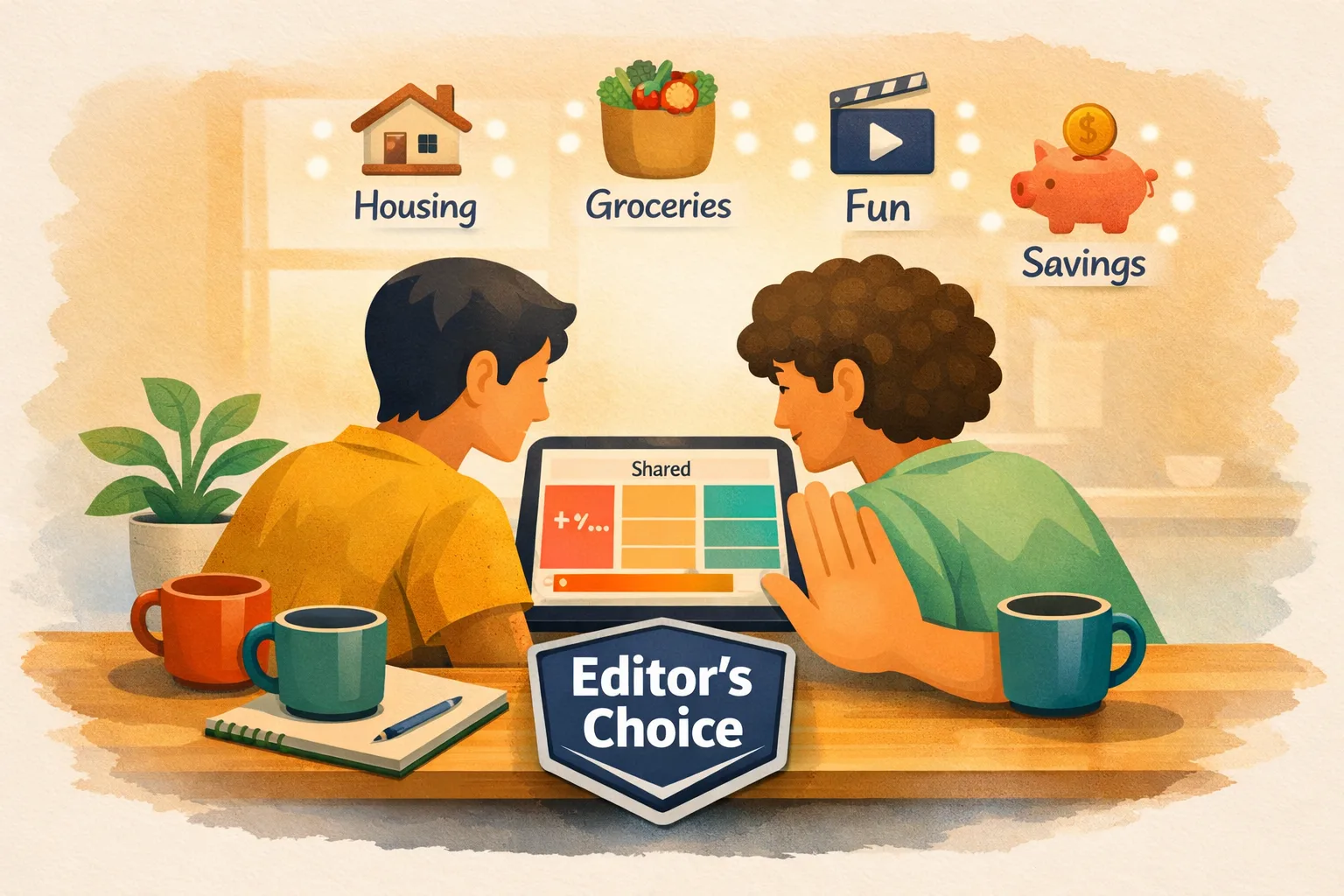
Couples can track shared spending without combining every account: agree on what counts as shared, how each person contributes, and when you will review the plan. The right setup depends on your finances and preferences, so treat the options below as starting points and adjust them together. The CFPB recommends that partners share enough financial information for each person to understand the household finances and manage them if responsibilities change.
Where shared tracking can become difficult
Common problems include:
- One partner handles most recordkeeping while the other has little access to the information.
- The couple discusses spending only after a surprise or disagreement.
- The partners have not agreed which purchases or accounts count as shared.
An agreed process can make the information easier to review, but it cannot remove every disagreement. Discuss responsibilities and privacy before you choose an account or tracking tool.
Insight
The CFPB advises couples to share key details about income, accounts, bills, and savings so both partners can understand and manage the household finances.
The 3 Expense Tracking Systems for Couples
System 1: The Fully Merged System
How it works: Partners route most shared income and expenses through joint accounts.
May suit: Couples who prefer to manage most household income and spending jointly.
The risk: If money personalities differ significantly, the partner who spends more conservatively can feel like a budget enforcer, and the freer spender can feel monitored or judged.
Consider: Agree how to handle personal purchases, account access, and decisions that affect both partners.
System 2: The Proportional Split System
How it works: Shared expenses (rent, utilities, groceries, joint savings) are split proportionally based on income. Each partner manages their own personal spending from their own account.
May suit: Couples who want to contribute to shared costs while keeping some finances separate.
The risk: Can create an "accounting" mentality where every dinner has to be split exactly. Also creates awkwardness when income changes significantly.
Consider: Agree how to calculate contributions and what happens when income or shared bills change.
System 3: The Income-Pool + Personal Allowance System
How it works: Partners pool income for shared bills and goals, then agree on how to handle personal spending.
May suit: Couples who pool income for shared bills and goals while retaining personal spending amounts.
The risk: Requires more accounting than System 2. Can feel complex initially.
How to make it work: Agree on how you will identify shared purchases and keep personal records private.
Discover Your Money Personalities
Before you agree on a system, you need to understand where you each stand. Take this quiz — independently, before comparing answers:
Couples Quiz
Couple Money Personality Compatibility Quiz
Discover both your money personality types and get personalized expense-tracking strategies for couples.
Each partner takes the quiz independently — don't share your answers first!
Questions to agree on before tracking
Whatever system you choose, discuss these questions before you start:
Rule 1: The No-Judgment Zone
Some couples choose to reserve personal spending for each partner. Others handle all spending jointly.
The amount, if any, should fit your household budget and be agreed by both partners.
Rule 2: The Big Purchase Threshold
Agree on whether you want to check in before certain shared purchases. Choose a threshold that fits your income, bills, and preferences, then revisit it when those change.
Decide how you want to communicate about purchases that affect shared finances.
Rule 3: The Monthly Review, Not Monthly Reckoning
Schedule a review at a time that works for both of you. You can use it to:
- Review shared account spending vs. plan
- Adjust budgets for the next month
- Celebrate savings wins
- Discuss any upcoming large expenses
Keep the review focused on shared goals and changes to the plan.
Tip
Choose a setting that both partners find comfortable.
Rule 4: The Equal Information Rule
Agree what information each partner can access and who is responsible for updating records.
The CFPB's couples' financial preparation guide includes questions about income, accounts, bills, and savings.
Rule 5: Separate the Person from the Behavior
When discussing a purchase, describe the record or amount and ask what both partners want to do next.
Use language that keeps the discussion focused on the shared decision rather than assigning blame.
How to Set Up a Couples Expense Tracking System Step by Step
Step 1: Review recent spending
Review a recent period that provides useful information for your household. Include the records you both agreed to review and note any missing data.
Step 2: Identify shared and personal expenses
Decide which expenses are "ours" (housing, utilities, groceries, joint savings goals) and which are personal (personal entertainment, clothing, personal hobbies).
Step 3: Agree on a system and contributions
Based on your money personalities (see quiz above) and income, choose which system works best. Set the monthly contribution numbers.
Step 4: Choose a tracking method
Decide whether to use a spreadsheet, budgeting app, receipt tracker, or bank tool. Check what information it collects, whether it supports shared access, and how each partner can correct records.
Review and refine
Use the review to adjust the process when income, bills, or priorities change.
Choose a tracking method
Yomio: A receipt and expense tracker for people who want records from scanned receipts or manual entry. It does not connect to bank accounts or automatically import and categorize bank transactions. Check the current product details to confirm whether its family-sharing options fit your workflow.
Budgeting apps, bank tools, shared spreadsheets, receipt trackers, and bill-splitting tools serve different needs. Check each provider's current feature list, pricing, account-data access, and sharing controls before choosing.
Insight
The best tool depends on the records you want to keep and the access you want to share. Confirm that its data sources and sharing controls fit the process you have agreed on.
Review shared expense records together
Capture purchases from receipts or manual entry, then compare the records with the spending plan you have agreed together. Yomio Family Groups support up to five people total.
Explore YomioCommon questions to discuss
Conflict: "You spend too much on X" Try: Review the relevant records together and discuss what amount, if any, you want to plan for the next period.
Conflict: "I don't know where the money goes" Try: Agree which accounts, receipts, and cash expenses belong in the review, then note any gaps in the records.
Conflict: "You never check on the finances" Try: Agree who will review which records and when you will talk about them.
Concern: "I feel like I can't spend anything" Try: Review the current plan together and decide whether personal spending amounts or different check-in rules would help.
FAQs
Q: Should couples have a joint account for expense tracking? Not necessarily. Many couples successfully track shared expenses using one partner's account while maintaining separate personal accounts. The system matters more than the account structure.
Q: What if one partner does not want to participate in expense tracking? Discuss what information each person is comfortable sharing and why the records matter to your household. Do not connect an account or share private financial information without the account holder's informed agreement.
Q: How do we handle income disparities fairly? Some couples choose proportional contributions; others use an equal split or another arrangement. Compare the options against your incomes, obligations, and preferences, then agree on the method together.
Q: Can we track expenses separately but still see a combined picture? That depends on the tool and the data you choose to include. Check whether it supports shared records, separate access, and the specific account or receipt sources you use.
Q: What happens when one partner spends more than planned? Discuss whether the spending affected shared bills or goals, then decide together if the plan needs to change.