Mileage Tracker vs Receipt Tracker: What You Actually Need
Mileage records document business vehicle use; receipts document purchases. Learn what each record supports and where the two methods differ.

Alex Chen
Product Manager & Personal Finance Advocate
Mileage Tracker vs Receipt Tracker: What You Actually Need
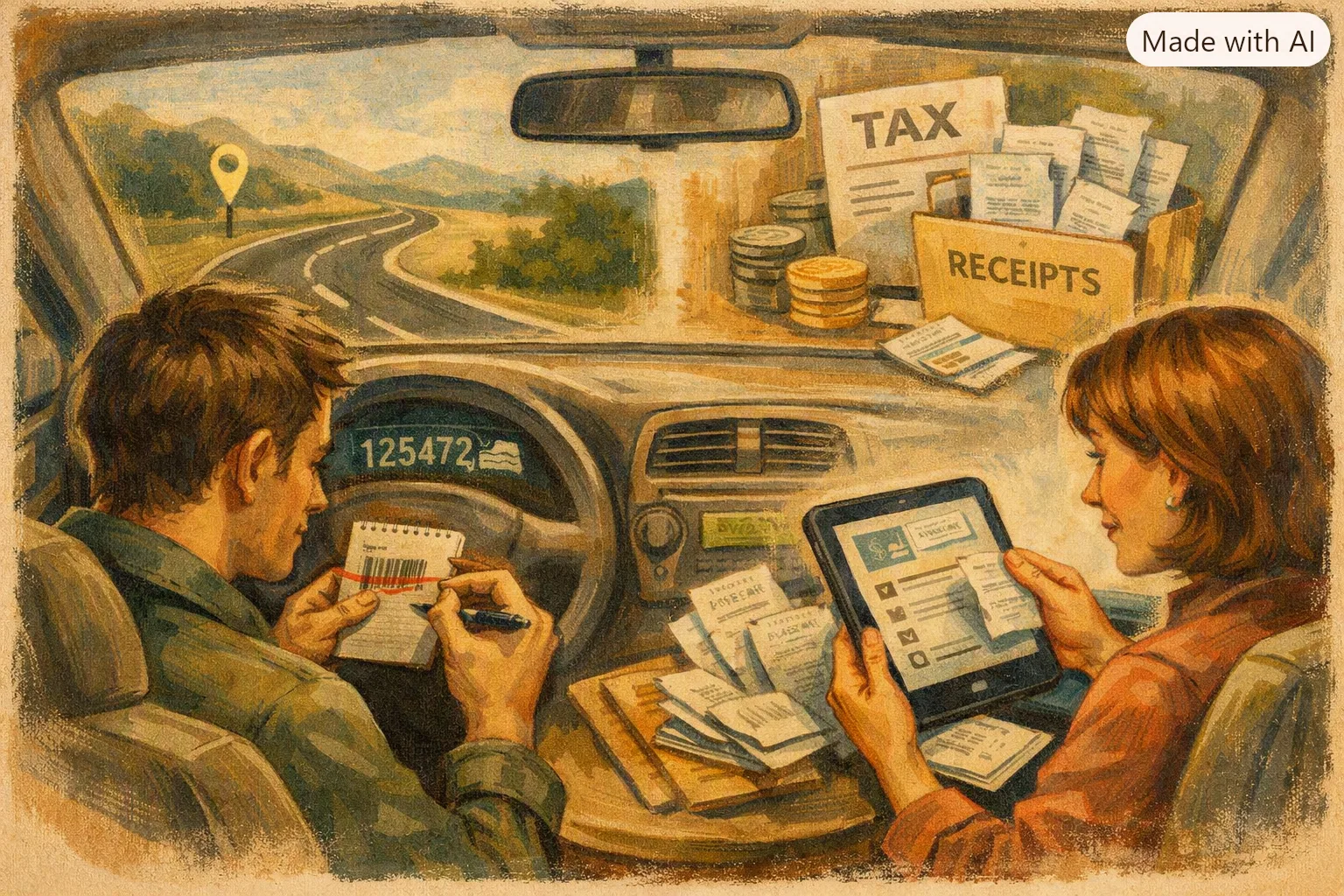
Mileage tracking and receipt tracking document different things. A mileage log supports business vehicle use; a receipt supports a purchase. If your work involves a vehicle and other business spending, you may need both kinds of records. Yomio captures receipt records, but it does not log mileage or calculate a vehicle deduction.
For U.S. federal taxes, the IRS requires specific records for vehicle expenses. Under the 2026 standard business mileage rates, trips from January 1 through June 30 use 72.5 cents per mile; trips from July 1 through December 31 use 76 cents per mile. Apply the rate for the date of the trip and keep records that support the mileage and business purpose. See the IRS standard mileage rates and Publication 463.
List the features you want to compare
Select requirements that matter to you. This checklist does not rank apps or verify vendor features.
Key takeaways
- Mileage logs record date, destination, business purpose, and distance.
- Receipts support the amount, date, and seller for a purchase; additional evidence may be needed to show business purpose.
- Some vehicle and travel expenses have strict substantiation rules, so accurate records matter.
- Incomplete records may sometimes be supported with other evidence; do not assume an estimate alone will be accepted.
- Yomio helps organize receipt records but is not a mileage tracker.
What a mileage log should capture
For each business trip, keep a record of the date, destination, business purpose, and miles. Also keep total annual vehicle mileage and supporting records that help distinguish business use from personal use. IRS rules can depend on the vehicle, expense method, and facts.
The standard mileage method and the actual-expense method have different requirements. The mileage rate is not a reimbursement guarantee, and applying it does not remove the need to substantiate business use. Review Publication 463 or ask a tax professional before choosing a method.
What receipts document
Receipts and invoices support purchases such as supplies, parking, tolls, repairs, fuel, lodging, and other costs. Keep the date, amount, seller, and any details needed for the applicable expense. For a mixed business and personal expense, preserve the allocation method and facts that support the business share.
A receipt does not by itself prove that a cost was business-related or deductible. For travel, vehicle, meals, and other categories, additional details may be required. IRS Publication 463 explains the documentation needed for many travel and transportation expenses, including limited exceptions and what to do when records are incomplete.
When you need both
If you drive for business and also buy business supplies or pay travel costs, maintain both a mileage log and purchase records. Keep each record linked to the relevant trip or work activity when practical. This makes it easier to explain the difference between vehicle use and money spent during the work.
If your employer reimburses you, follow its documentation policy and retain the records required for the reimbursement arrangement. For an employee's unreimbursed expenses, federal deduction rules differ from self-employed rules; check current IRS guidance before claiming a deduction.
Choosing a tool
Choose a mileage app or log that records trip details and can export records in a format you can retain. Choose a receipt tool for purchase evidence and transaction organization. Check each tool's current features before relying on it for a particular recordkeeping task.
Yomio focuses on receipt scanning and expense records. It does not automatically record trip routes, calculate business miles, or apply the IRS mileage rate. Keep a separate mileage record if you need one.
Tip
A fuel or repair receipt shows money spent. It does not show which miles were business miles. Keep the evidence that answers each question.
Organize receipt records alongside your mileage log
Use Yomio to capture and organize receipts for business purchases. Keep trip dates, destinations, business purposes, and mileage in a suitable mileage log.
Track Receipts