How to Track Travel Expenses and Stay Within Your Trip Budget
Set a realistic trip budget, record costs as they happen, and review spending in one currency. A practical guide to tracking travel expenses at home or abroad.

Yulia Lit
Consumer Psychology & Behavioral Economics Researcher
How to Track Travel Expenses and Stay Within Your Trip Budget
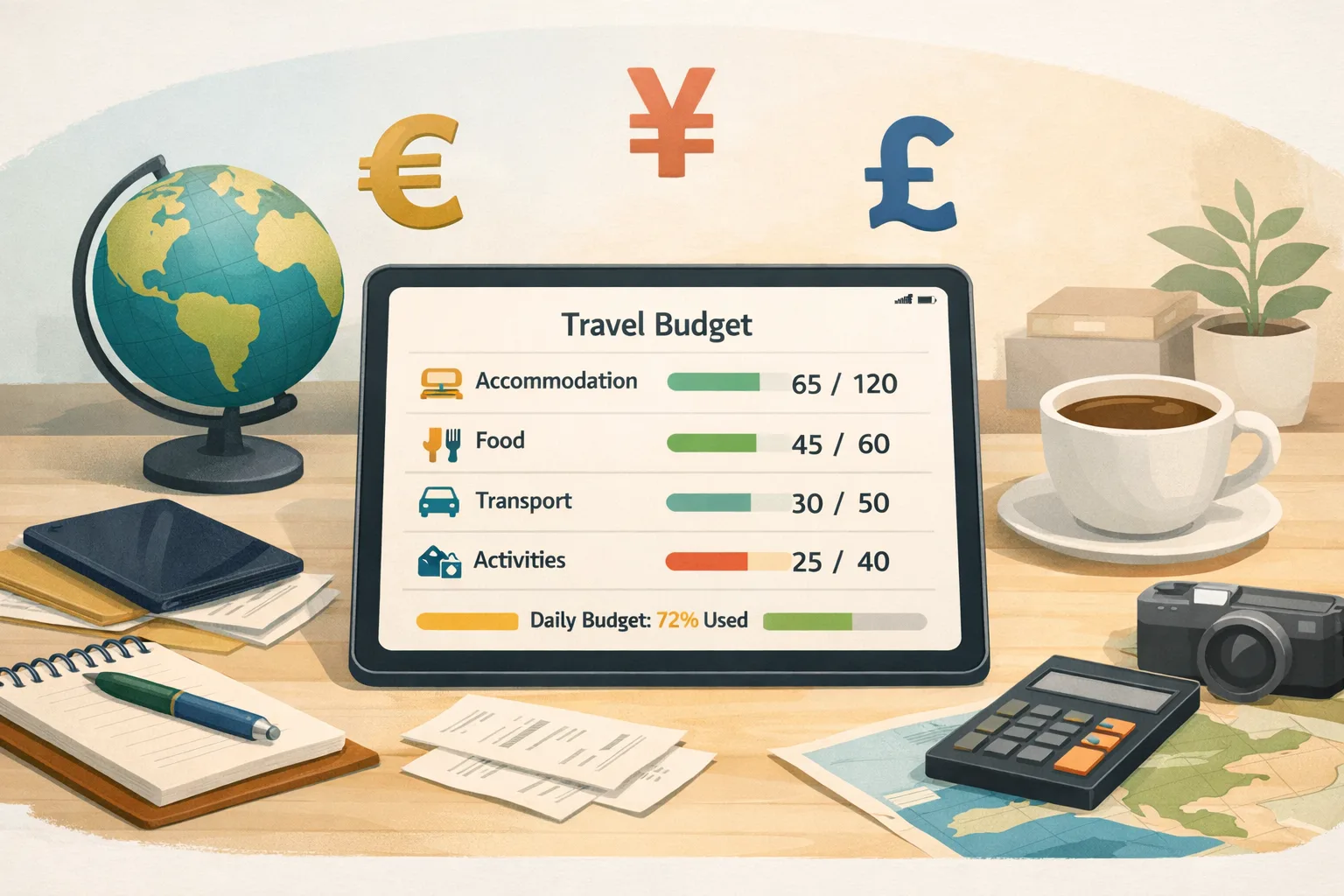
To keep a trip within budget, set one total limit, list the costs you already know, and record each new expense as it happens. Review the running total each day so you can adjust later plans while you still have options.
There is no universal split for lodging, food, transport, and activities. Prices and priorities vary by destination and traveler, so build category limits from your bookings and plans instead of relying on a generic percentage table.
Information
Record the cost of bookings you have already made, such as lodging and transport. These amounts give you a clearer starting point for planning the rest of the trip, but the total will still depend on meals, local transport, activities, and changes to your plans.
Tip
For a multi-day trip, decide which meals you want to eat out and which you could prepare or buy from a grocery store. Compare local prices and account for access to a kitchen, food-storage options, dietary needs, and your schedule.
Warning
When paying by card internationally, a merchant may offer Dynamic Currency Conversion (DCC), which charges you in your home currency using the merchant’s conversion rate. Compare the displayed rate and fees with your card issuer’s terms. Visa advises cardholders to decline a conversion offer if required details are missing or they feel pressured; paying in local currency lets your card issuer handle the conversion (Visa guidance).
Key Takeaways
- Start with the amount you can spend on the trip, then subtract fixed costs such as transport and lodging.
- Divide the remaining amount among the categories that matter to your trip.
- Record each purchase with its amount, date, currency, and category.
- Check the remaining budget daily and adjust optional plans when needed.
- For international card payments, compare the offered conversion rate and fees before choosing a currency.
1. Set the total trip limit
Choose a total amount that fits your savings plan and other commitments. Include transport to and from the destination, lodging, local travel, food, activities, insurance, and a buffer for unexpected costs.
Next, list costs that are already known. Use confirmed booking totals, including taxes and fees, instead of an advertised base price. Subtract those costs from the total to see what remains for day-to-day spending.
The planner below divides a total trip budget by the number of days. It gives you an average daily amount to use as a reference. It does not recommend category percentages or convert between currencies.
Travel Budget Planner
Plan Your Trip Budget
Enter your trip length and total budget. The planner calculates a daily average; it does not split spending into preset categories.
Use the same currency for all amounts. This planner does not convert currencies.
Enter trip length and total budget to calculate a daily average.
2. Make category limits from your actual plans
Create categories that match the trip, such as lodging, local transport, meals, activities, and shopping. You can combine categories when tracking more detail would take too much effort.
Use known prices first. Add up booked lodging, tickets, reservations, and other commitments. For flexible costs, look up current prices from local transport agencies, venues, restaurants, or other providers in your destination. Prices can change, so check them close to the trip.
Leave some of the uncommitted budget unassigned as a buffer. If you use it, record what changed and decide which later plans should be reduced or removed.
3. Record costs while you travel
Capture a purchase when it happens. Save the receipt or confirmation and record the date, merchant, amount, currency, category, and whether the cost is shared with someone else.
For a group trip, agree in advance how to record shared costs. One person can record the full payment and note who owes a share, or each person can record their own part after settling. Use the same method throughout the trip to avoid duplicate totals.
If you use Yomio, you can scan a receipt and organize the expense by category. Expense records can use their transaction currency, while analytics convert foreign-currency expenses to your default currency. Check the app's displayed converted amount when you review totals.
4. Review the budget each day
At the end of the day, compare the recorded total with the amount you planned to spend by that point. Check which categories changed and how much budget remains for the rest of the trip.
If a cost is higher than expected, make a specific adjustment. You might choose a lower-cost activity, reduce shopping, or use part of the buffer. Avoid changing every category at once; adjust the plans that matter least to you first.
For example, if a booked activity costs more than expected, decide whether to use the buffer or replace another optional activity. Recording the choice keeps your remaining budget clear.
5. Handle foreign currencies carefully
Keep the original amount and currency for each international purchase. If you convert the amount for your own budget, record the converted value and the rate or source you used. Your card issuer may apply its own exchange rate or foreign-transaction fee, so check its terms before traveling.
Some merchants and ATMs offer Dynamic Currency Conversion (DCC), which presents a charge in your home currency. Visa says the offer should show the amounts in both currencies, the exchange rate, and any additional fees or markup. Compare the full costs and make the choice that works for you; decline the offer if the required details are missing or you feel pressured. Visa's DCC guide explains what information to check.
6. Reconcile after the trip
When you return, compare your expense records with card statements, receipts, and booking confirmations. Check for missed tips, transit fares, deposits, refunds, or shared costs that were settled later.
Then review the final total by category. Use it as a starting point for your next trip, while checking current destination prices rather than assuming the same costs will apply.
If you save for trips in advance, set a monthly contribution based on the amount you want to have by the booking date. For example, saving 1,200 over 6 months means setting aside 200 per month in the same currency. This is a planning calculation, not a recommended savings target.
Keep travel receipt details with each expense
Capture or manually enter travel purchases, then compare the records with your itinerary and posted card statements. Yomio does not sync bank transactions or provide live exchange quotes.
Explore YomioFrequently Asked Questions
What is the easiest way to track expenses on a trip?
Choose a method you can use consistently, such as a spreadsheet or an expense-tracking app. Record each expense when it happens, keep the original currency, and review totals once a day.
Should I track every small purchase?
Track purchases that count toward your trip budget. If individual items are too much detail, record them as one daily total for a category and keep receipts until you reconcile the total.
How do I split travel costs with a group?
Agree on who records shared costs and how everyone will settle their share. Keep a note of the payer, total, participants, and repayment so each cost is counted once.
Should I pay in my home currency or the local currency?
Compare the amount, exchange rate, and fees shown at checkout with your card's terms. Visa requires DCC offers to disclose the local and cardholder-currency amounts, exchange rate, and additional fees or markup; the choice depends on the total cost and your preference.
More from Yomio
- Sinking funds explained — plan for travel and other irregular expenses.
- How to save money fast — review practical ways to free up money for a goal.
- How to stop living paycheck to paycheck — build a spending plan around your income schedule.