Dining Out Spending Tracker: How to Set a Restaurant Budget
Track restaurant, takeout, and delivery costs, then set a dining budget that fits your own priorities and cash flow.

Yulia Lit
Consumer Psychology & Behavioral Economics Researcher
Dining Out Spending Tracker: How to Set a Restaurant Budget
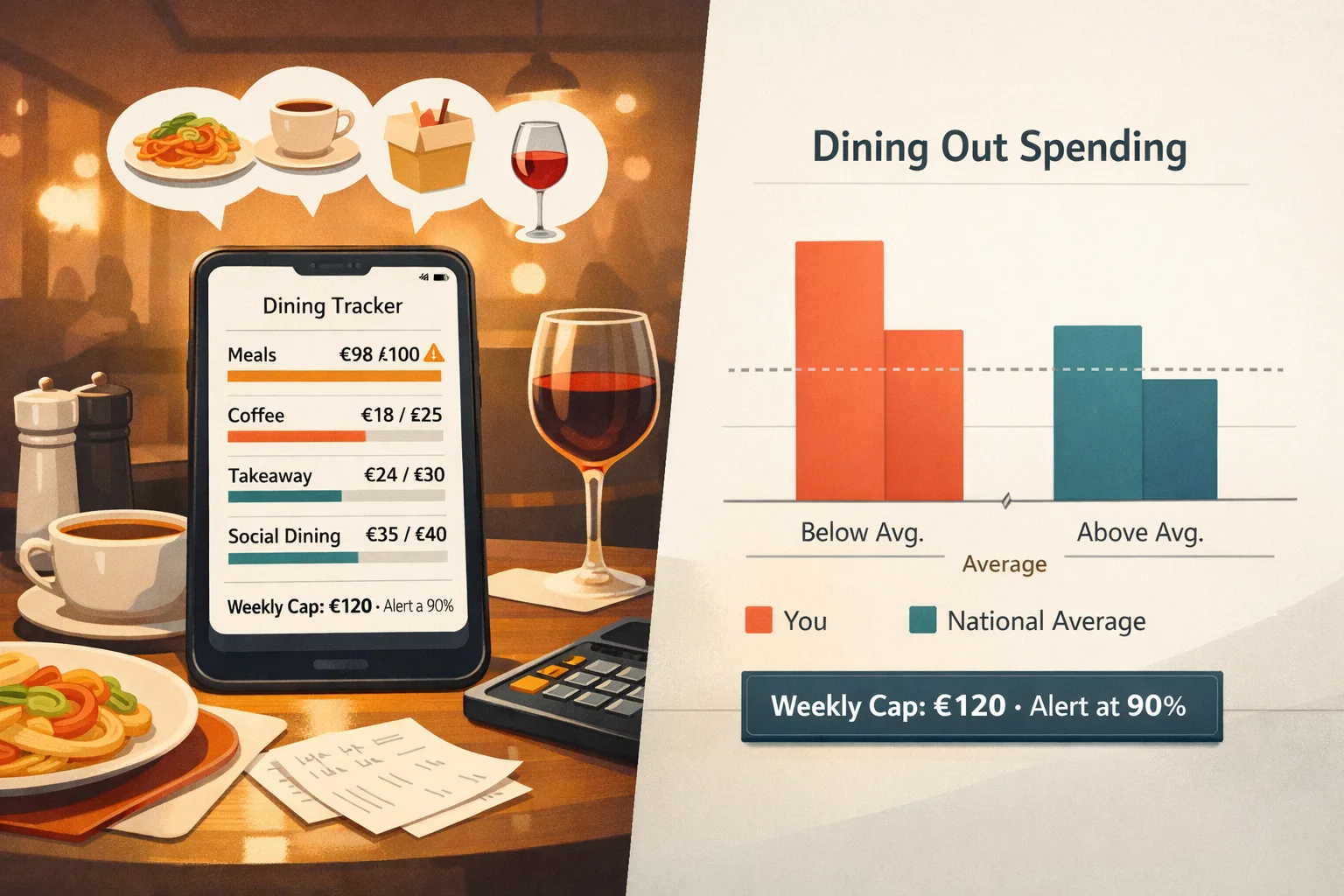
There is no single correct amount to spend on restaurants, takeout, or delivery. Track those purchases for a month, check what remains after essential costs and savings goals, and choose a limit you can maintain.
The Bureau of Labor Statistics Consumer Expenditure Survey reported average annual U.S. food-away-from-home spending of $3,945 per consumer unit in 2024. That is an observed national average, not a recommended budget or a target for every household.
Track the full cost
For four weeks, record restaurant meals, takeout, delivery, coffee shops, tips, and delivery or service fees. Use one category if you want a simple total, or separate categories if you want to compare delivery with dining in. Include work meals in a separate tag when you need to distinguish reimbursed costs from personal spending.
Delivery orders can include several cost components. Compare the final checkout total with pickup or dining in when deciding whether the convenience is worth the difference.
Set a limit from your own budget
Start with your actual monthly total. Then check your take-home income, fixed bills, debt payments, savings goals, and other priorities. Choose a dining amount that fits those constraints; national averages cannot account for your household size, location, health needs, or work schedule.
If the first limit is hard to meet, use your recent spending as the starting point and adjust it in steps. You can also set a weekly check-in amount by dividing the monthly limit by 4.3. Treat the weekly number as a reminder to review, not as a rule that every week must match exactly.
Make the plan easier to follow
- Record purchases when they happen, or review receipts and payment records once a week.
- Decide in advance which expenses count as dining out, such as coffee, workplace lunches, and delivery fees.
- Keep reimbursed work expenses separate from personal costs.
- Review the category before changing your limit. A high month may reflect travel, celebrations, or unusual work demands.
- If you want to spend less, choose a specific change that suits you, such as fewer delivery orders or a planned weekly meal out.
Yomio can record purchases from receipts and show spending records, but it does not connect to bank accounts or provide dining-category budget alerts. If you use it, add a receipt or enter the purchase manually, then review your records against the limit you set.
Use national data with care
The BLS survey is useful for understanding broad U.S. spending patterns. It does not tell you what your household should spend, and the all-consumer-unit average is not a direct comparison for a person with a different household size or income. For your own decision, recent spending records and your available cash flow are more useful.
Informacja
Delivery costs depend on the restaurant, platform, location, order size, and promotions. Compare the final checkout total—including any service or delivery fees, taxes, and tip—with the restaurant’s menu or pickup price before deciding what the convenience costs you.
Ostrzeżenie
Nutrition and price are separate questions. Restaurant meals can cost more or less than home-prepared meals depending on the dish, location, and ingredients. Compare the actual prices and choose the option that fits your needs and budget.
Convert your own monthly dining amount
Enter an amount in your chosen currency. The weekly figure is a simple monthly-to-weekly conversion, not a recommended limit.
Use the same currency for every amount. This tool does not convert currencies.
Keep dining purchase records together
Record restaurant, coffee, and takeout purchases from receipts or manual entry, then review them alongside the dining limit you set.
Explore YomioFAQ
How much should one person budget for dining out?
There is no universal amount. Review your own spending and set a limit after essential bills, debt payments, and savings priorities. Use national data as context only.
Should coffee shop purchases count as dining out?
Choose a consistent rule. You can include coffee shops in dining out or track them separately, as long as your categories help answer the question you have.
How should I track work meals?
Record work meals separately if you need to distinguish reimbursed costs from personal spending. Follow your employer's reimbursement process and keep the receipt when required.
More from Yomio
- How to stop overspending using alerts — practical ways to review spending before a limit is reached.
- Impulse spending and system design — how app design can affect purchase decisions.
- Spending limits by category — set category limits that fit your circumstances.
- Monthly spending review — a repeatable way to review your records.