Budget Reset After Job Loss: A Practical First-Month Plan
Use a first-month checklist to review cash, essential bills, income options, and spending after losing a job.

Yulia Lit
Behavioral Finance Writer
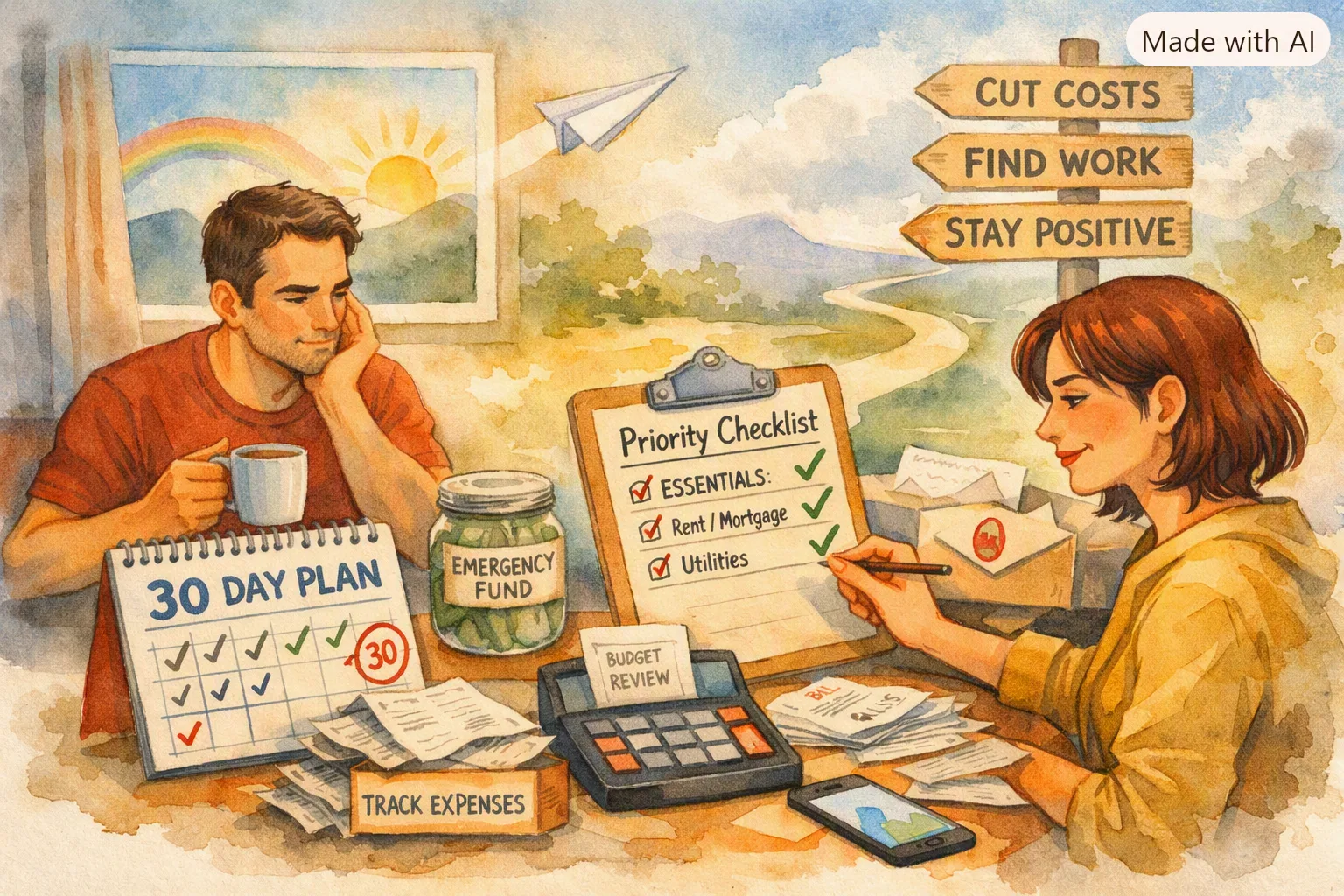
Budget Reset After Job Loss: A Practical First-Month Plan
After a job loss, list your available cash, essential bills, and expected income before making large spending changes. Then contact benefit programs, creditors, insurers, and service providers directly to confirm eligibility, deadlines, and payment options.
This U.S.-focused checklist is a way to organize the first month, not a prediction of when benefits will arrive or a substitute for local advice. Unemployment programs are administered by states, and eligibility and claim steps vary. The U.S. Department of Labor advises people to contact the state unemployment program and file promptly.
First: build a current cash picture
Write down:
- Cash available in checking and savings
- Final wages, severance, or other payments you expect, with their estimated dates
- Essential bills and their due dates
- Minimum payments on debts and any secured obligations
- Essential costs that vary, such as food, transport, and medicine
Use current statements and provider accounts when possible. Do not count a benefit or payment as available cash until you know the amount and timing.
Contact the programs and providers that apply
File for unemployment benefits through the relevant state program as soon as you can, and keep copies of submitted forms and notices. Ask your former employer about final pay and any benefits information you need. Contact your health plan administrator or the appropriate marketplace to understand coverage options and deadlines.
If you expect difficulty paying a bill, contact the provider before the due date and ask about hardship plans, due-date changes, or other options. Get the terms in writing and record who you spoke with.
Sort expenses by immediate need
Review your bills and spending records, then group expenses into:
- Essential now: housing, basic utilities, food, medicine, required insurance, and transport needed for care or job search.
- Important obligations: debt payments, childcare, phone and internet, and other commitments that protect access to work or essential services.
- Flexible spending: subscriptions, dining out, optional purchases, and services you can pause or change.
The right order depends on your household and local rules. If you are unsure which payments to prioritize, contact a reputable nonprofit counselor or legal aid service.
Use a four-week review cycle
Week 1: Gather information
Save notices, account balances, statements, and receipts in one place. Make a list of benefit, insurance, and creditor contacts, plus any dates they give you.
Week 2: Update the plan
Replace estimates with confirmed amounts and dates. Review which expenses can be reduced or moved, and confirm any changes directly with the provider.
Week 3: Check the gap
Compare available funds with essential costs for the coming weeks. If the plan does not balance, seek assistance early and ask creditors or providers about options.
Week 4: Reassess
Update the budget when income, expenses, or claim information changes. Keep a note of open questions and follow up with the responsible organization.
Planner
Build Your Sinking Fund Plan
Select the expense categories that apply to your life. Enter the annual amount you expect to spend, and we'll calculate your monthly contributions.
Select at least one category above to get started.
Keep spending records current
Save receipts for purchases you need to review and compare them with account statements. Yomio can help record receipt-based expenses, but it does not track benefit claims, bill due dates, or payment status. Use the relevant government and provider systems for those tasks.
Information
You do not need perfect numbers on day one. You need consistent numbers every day. Track receipts, update your runway forecast every Friday, and let the data guide next week's decisions.
Review receipt-based expenses
Use Yomio to capture and review purchase receipts while you manage benefits and bills through the relevant providers.
Explore expense trackingRelated reading

Last reviewed: September 27, 2026.