Pet Expense Tracker: Organize Vet, Food, and Care Costs
Keep pet receipts and recurring costs in one review process, then plan for routine care and unexpected expenses using your own records.

Yulia Lit
Behavioral Finance Writer
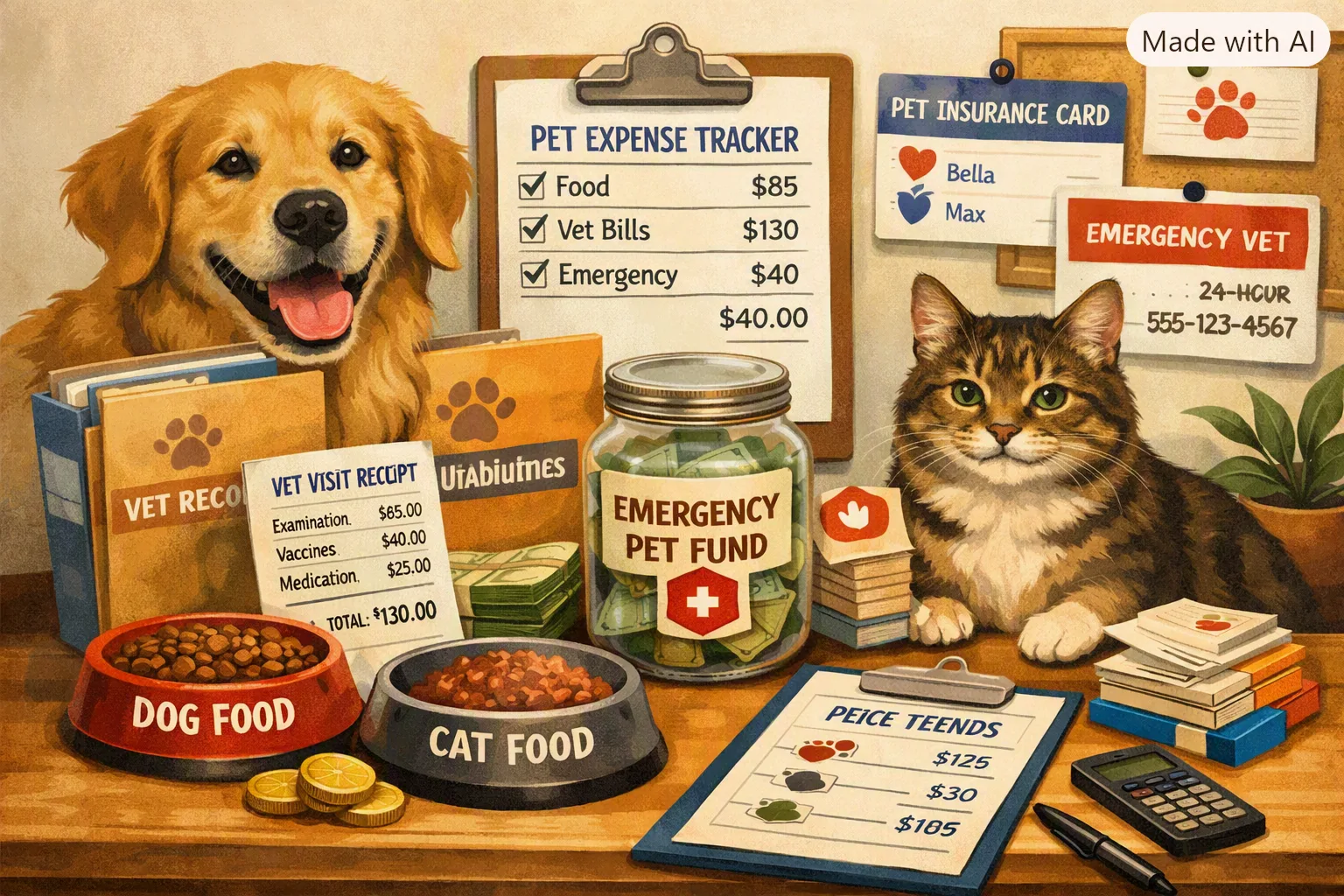
Pet Expense Tracker: Organize Vet, Food, and Care Costs
Save receipts and invoices for food, veterinary care, medication, insurance, boarding, and supplies, then review the totals against your statements. Use your own pet’s needs, local prices, and veterinary advice to plan; costs vary by animal, location, provider, and care.
Create categories that match your records
Start with a small number of groups that you can maintain:
- Food and everyday supplies
- Routine veterinary visits and preventive care
- Medication and treatment
- Insurance premiums and claim reimbursements
- Grooming, boarding, and training
- Unplanned or emergency care
Change the categories if they do not match your receipts or how you want to review spending. Keep insurance reimbursements separate from charges so your records show both the cost and the amount repaid.
Save useful details with each expense
For a veterinary visit, keep the itemized invoice and payment record. Record the date, provider, pet, amount, and any claim or follow-up reference that matters to you. Keep medication instructions and care records in the appropriate medical file rather than relying only on a spending app.
For recurring costs, keep the provider’s current terms and check statements for changes. An insurance policy may have limits, exclusions, deductibles, or reimbursement rules, so review the actual policy before assuming a cost will be covered.
Use your own history to plan
Review routine costs over a consistent period and note seasonal or one-time expenses separately. Use the resulting pattern as a starting point for your budget, then adjust when your pet’s needs or prices change. There is no universal savings target that fits every pet or household.
If an unexpected bill would be difficult to manage, ask your veterinary provider about payment options and seek local assistance programs where available. Do not delay urgent care based on a generic budgeting target.
Calculator
Emergency Fund Target Calculator
Based on your monthly expenses, job security, and household size.
Include rent, food, transport, utilities, minimum debt payments.
Know what the tracker can do
Yomio can capture and organize receipt-based expense records. It does not manage pet medical records, insurance claims, appointments, or an emergency fund. Review scanned details against the source receipt and use dedicated provider or veterinary systems for care and coverage information.
Insight
When emergency costs have a dedicated bucket and a pre-calculated buffer target, recovery decisions become calmer and faster. You know roughly what to expect.
Keep pet purchase receipts together
Use Yomio to capture and review receipt-based expenses. Store care plans, appointments, and insurance details in the systems designed for them.
Explore expense trackingRelated reading



Last reviewed: September 27, 2026.