Donation Receipt Tracking: Organize Records for Tax Time
Keep donation records and acknowledgments together, and check current federal rules before claiming a charitable contribution deduction.

Yulia Lit
Behavioral Finance Writer
Donation Receipt Tracking: Organize Records for Tax Time
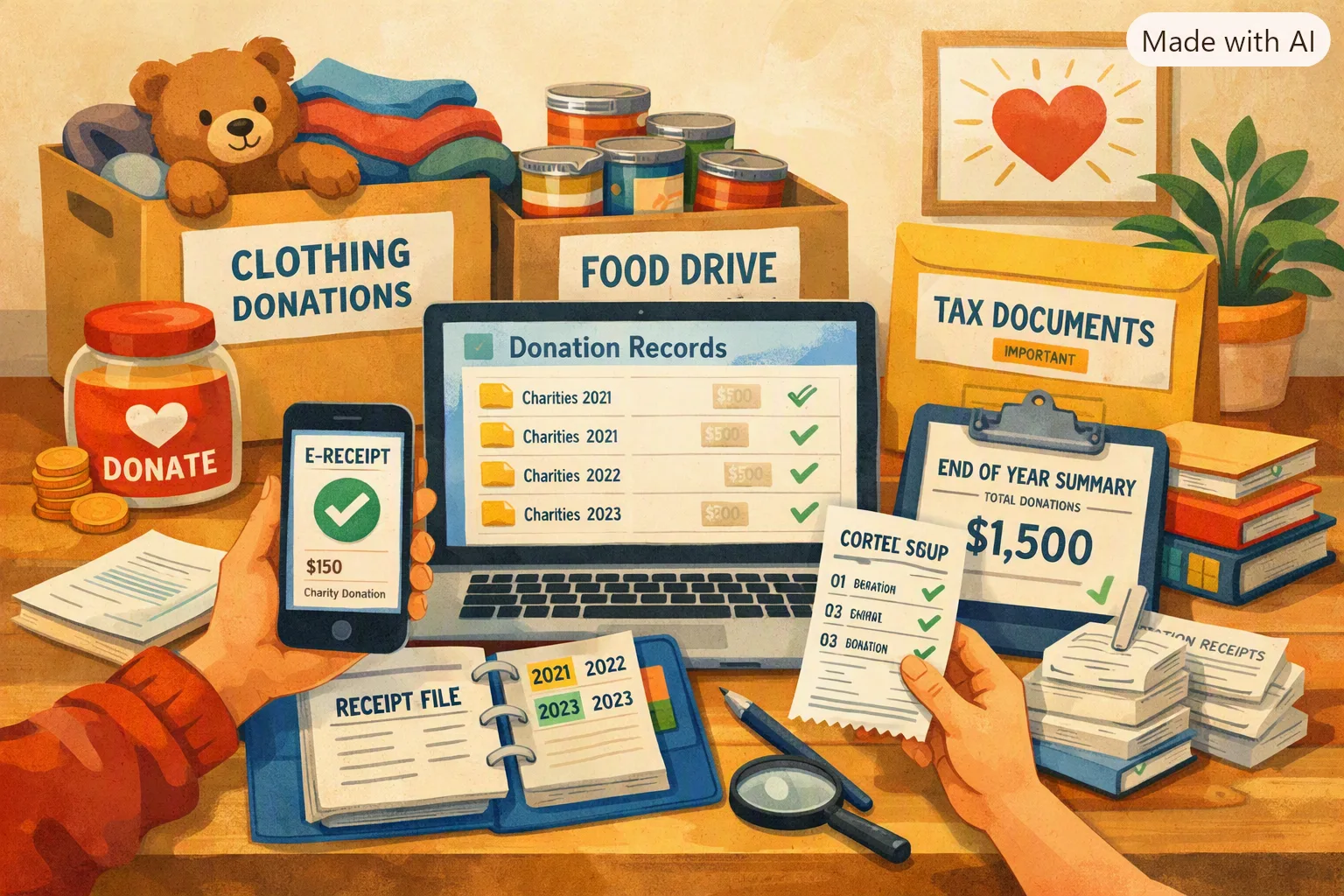
Keep a record of each charitable gift with the date, recipient organization, amount or property description, payment method, and any acknowledgment or benefit you received. Organized records make review easier, but they do not prove that a gift is deductible or that you qualify for a deduction.
Federal charitable deduction changes for 2026
U.S. federal rules changed for tax years beginning in 2026. The IRS says eligible taxpayers who do not itemize may be able to deduct up to $1,000 in qualifying cash contributions, or $2,000 for married taxpayers filing jointly, subject to limitations. For taxpayers who itemize, charitable contributions are deductible only to the extent the aggregate exceeds 0.5% of adjusted gross income. See IRS Publication 505 and Topic 506 for current rules, and ask a tax professional how they apply to your situation.
Keep the records that match the gift
For monetary gifts, keep a bank record or written communication from the qualified organization that shows its name, the date, and the amount. For a single contribution of $250 or more, the IRS generally requires a contemporaneous written acknowledgment from the organization. The acknowledgment must include the required contribution information and state whether goods or services were provided in return.
Additional rules apply to noncash gifts, payroll deductions, vehicle donations, and contributions that provide goods or services. The federal rules also depend on the recipient organization and the type of property. Review current IRS Publication 526 and Topic 506 rather than applying the cash-gift rule to every donation.
Create a simple recordkeeping process
- Save the confirmation, receipt, bank record, or acknowledgment when you make the gift.
- Note the organization, date, amount or property, and payment method.
- Record any goods or services received, such as event admission or merchandise.
- Keep supporting records with your tax documents and retain them under the applicable rules.
- Before filing, confirm the recipient’s eligibility and the requirements for the particular gift.
A receipt organizer can help keep files together. It cannot verify that an organization is qualified, appraise donated property, decide whether you itemize, or determine the amount of a deduction.
U.S. federal recordkeeping only
Organize records for review
Choose records you want to gather. This checklist does not decide whether an expense is deductible or reportable.
Select records to gather:
Select at least one record type.
Can Yomio organize donation receipts?
Yomio can store receipts and expense records that you scan or enter. It does not verify charitable organizations, track donations automatically, maintain a dedicated tax-deduction ledger, or determine whether a contribution is deductible. Review the records and keep any acknowledgment or tax forms required for your situation.
This article covers selected U.S. federal rules, not state or local tax treatment. For a specific return or noncash gift, use current IRS guidance or qualified tax advice.
Information
A periodic review can help you spot missing acknowledgments before filing. If a receipt or acknowledgment is missing, contact the organization; availability and response times vary.
Organize donation records for tax review
Scan receipts or enter expenses, then review the records you add and keep any required acknowledgment with your tax documents. Yomio does not track donations automatically or determine whether they qualify for a deduction.
Organize Donation Receipts