Warranty Tracking: Keep Receipts and Coverage Records Together
Keep purchase receipts, warranty terms, and service records together so you can check coverage and find the documents a seller or manufacturer requests.

Alex Chen
Product Manager & Personal Finance Advocate
Warranty Tracking: Keep Receipts and Coverage Records Together
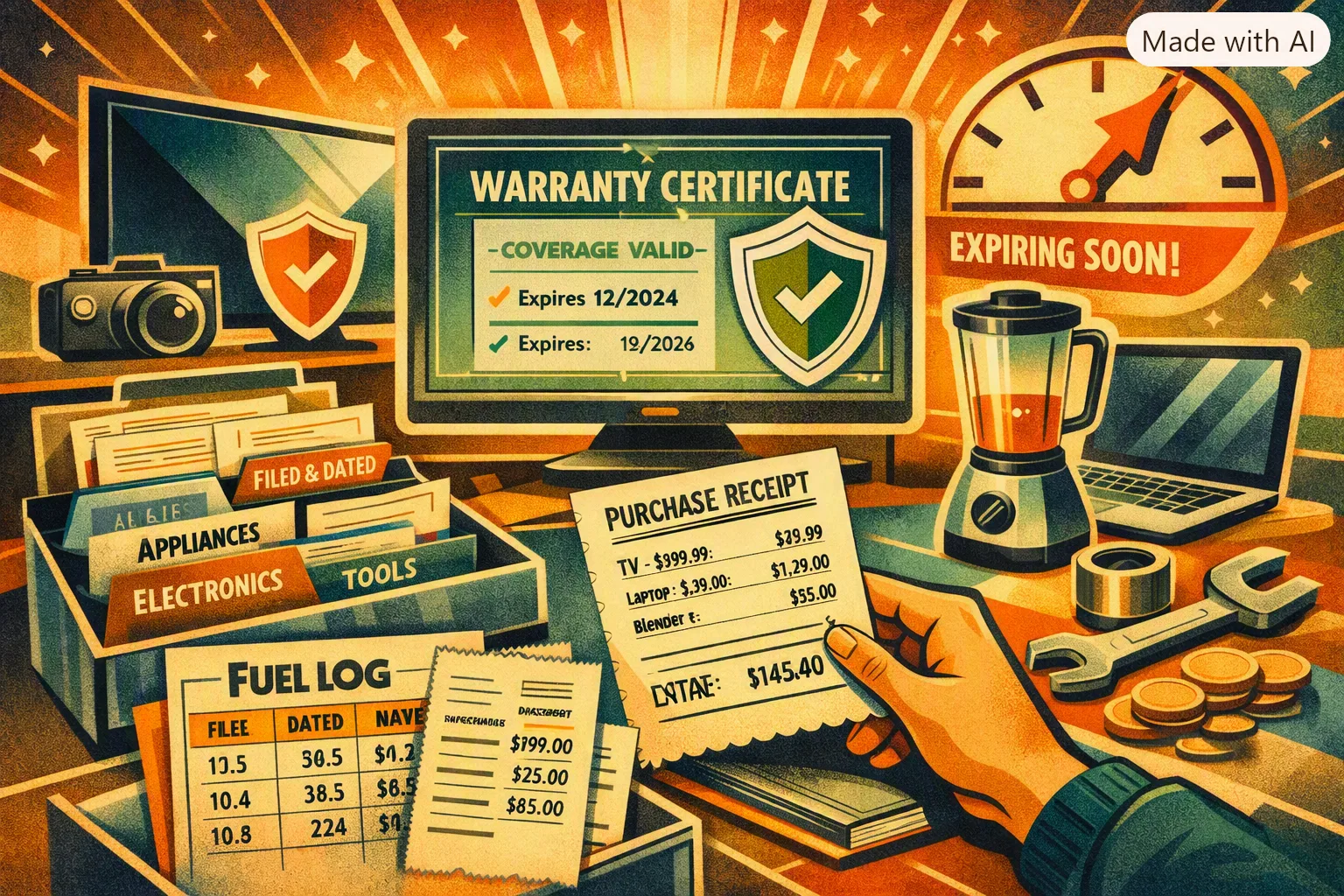
Save the receipt and warranty document with the product details and any service records. If the product later needs repair, the seller or manufacturer may ask for proof of purchase, the coverage terms, and evidence of required maintenance. The Federal Trade Commission recommends keeping the receipt with the warranty; a receipt helps show when you bought the product and that you are the original owner.
A receipt does not guarantee that a repair is covered. Warranty length, exclusions, proof requirements, and claim steps vary by product and seller. Read the written terms and record any deadline that matters to you.
Related reading



Key takeaways
- Keep a copy of the receipt and the written warranty or service contract.
- Record the product name, model or serial number, purchase date, and seller when available.
- Save maintenance invoices and claim correspondence for products whose warranty terms require or may depend on maintenance.
- Check the warranty for coverage, exclusions, duration, and claim instructions.
- A receipt app can organize purchase proof, but it cannot confirm coverage or guarantee claim approval.
What to keep with a product
For an item with a warranty or service contract, collect the records that help you identify the product and understand the terms:
- Receipt, invoice, or order confirmation.
- Product name and model or serial number, if available.
- Written warranty and any separately purchased service contract.
- Registration confirmation or other required documents.
- Repair orders, maintenance records, and correspondence about a problem.
The FTC advises consumers to save the warranty and purchase receipt. For vehicles, maintenance receipts may help document that service requirements were met. Check the product's actual terms because requirements differ.
Set up a simple recordkeeping process
1.
Keep the proof of purchase
Save the receipt or order email when you buy the product. Make sure a digital copy is readable and includes the seller, date, and item details shown on the original.
2.
Save the coverage terms
Download or photograph the written warranty and any service contract. Note the start date, end date, covered parts or repairs, exclusions, and contact instructions. A service contract is separate from the manufacturer's warranty; compare both before paying for extra coverage.
3.
Add maintenance and service records
For products with maintenance requirements, save invoices and service dates. Keep notes about who you contacted, when you contacted them, and what they said about a claim.
4.
Review when something goes wrong
Read the warranty instructions and gather the receipt, terms, product details, and service records before contacting the seller or manufacturer. If a problem occurs during the stated period, follow the claim process promptly and keep copies of messages and documents you send.
Document review aid
Review information from a document
Open each section to see examples of fields a document may contain. The fields and extraction results vary by document.
- Merchant or issuer
- Document date
- Currency
These are examples to review. They are not accuracy ratings or guarantees.
Keep records you can retrieve
Store the receipt and terms together with a searchable description such as product type, seller, and purchase date. Keep the original electronic receipt where practical. If you use a paper receipt, make a clear copy and retain it with the product records. Check that saved files open and remain readable.
There is no universal dollar amount or time threshold for what is worth tracking. Prioritize items whose warranty terms, replacement cost, or maintenance requirements make the records useful to you.
Tip
The receipt helps establish the purchase. The written warranty explains what the company promised and how to ask for service.
Keep receipt records organized
Capture receipts in Yomio and keep the warranty terms and service records with your other product documents. Check the seller's coverage and claim requirements directly.
Track Receipts