How to Track Car Maintenance Expenses: A Practical Recordkeeping Guide
Record service dates, odometer readings, receipts, and vehicle costs in one reviewable process. See how to compare your records with current ownership-cost estimates.

Yulia Lit
Behavioral Finance Writer
How to Track Car Maintenance Expenses: A Practical Recordkeeping Guide
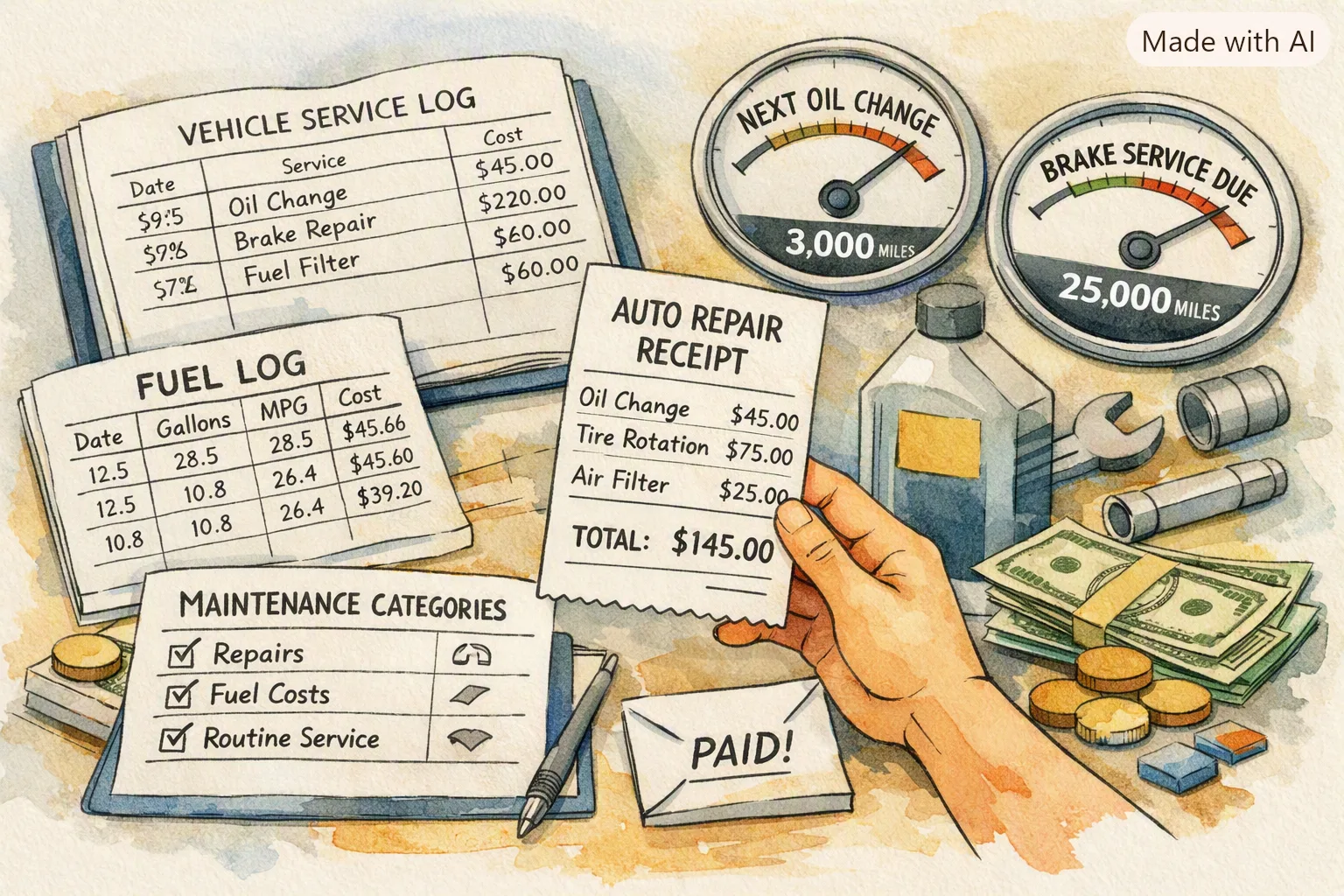
Keep a maintenance log with the service date, odometer reading, work performed, shop, and cost, then save the matching invoice or receipt. Track fuel, maintenance, repairs, insurance, and registration separately so you can review both operating and ownership costs.
AAA's September 2026 Your Driving Costs analysis estimates the average annual cost of owning and operating a new vehicle at $12,863 over five years and 75,000 miles. AAA says its methodology changed in 2026, so this result is not directly comparable with its 2025 estimate. The figure covers total ownership and operation, not maintenance alone, and your costs will vary by vehicle, location, and driving.
Records to keep
For each maintenance or repair visit, save:
- Service date and odometer reading.
- Shop or service provider and a short description of the work.
- Parts, labor, taxes, fees, and total paid when the invoice lists them separately.
- Warranty information, recommended follow-up, and any estimate for work you declined.
Keep fuel or charging costs, routine maintenance, repairs, insurance, registration, and financing in separate categories in your own record system. A vehicle manual and the service provider's invoice can help you check the recommended service interval and what was completed.
A simple tracking process
- Record the odometer reading when you refuel, charge, or bring the car in for service.
- Save the receipt or invoice and enter the date, amount, provider, and work performed.
- Link each record to the vehicle in a notebook, spreadsheet, or tool that supports vehicle identifiers.
- Review records periodically for missing invoices, recurring work, warranty details, or changes in cost.
- Before a major repair, compare the written estimate with the vehicle's current condition, value, and your transportation needs.
To calculate cost per mile for a chosen period, divide the costs you included for that period by the miles driven in the same period. State which costs are included; fuel-only cost per mile is different from a total ownership estimate. A mileage record is needed for this calculation.
What receipt tracking can and cannot do
A receipt can preserve details such as the service provider, date, work description, and amount shown on the document. It does not replace an odometer log, vehicle maintenance schedule, warranty terms, or a mechanic's assessment.
Yomio can scan a receipt and create an expense record after you review the extracted details, or you can enter an expense manually. It does not track vehicle mileage or calculate vehicle cost per mile. Keep mileage and vehicle-specific maintenance details in a system that records those fields.
Monthly review checklist
monthlyChecklist.badge
monthlyChecklist.title
Insight
Small service and repair charges can be difficult to compare over time. Keep invoices with dates and odometer readings, then review recurring work and price changes against the vehicle's maintenance needs.
Related reading


Keep maintenance receipts with your expense records
Scan service receipts, review the extracted details, and save expense records. Keep odometer readings and maintenance schedules in a mileage or vehicle log.
Track Vehicle ExpensesFrequently asked questions
Should fuel and maintenance be recorded together? You can group them under one vehicle in your own system, but separate categories make it easier to compare fuel or charging costs with service and repair costs.
How often should I review vehicle records? Choose a review interval that fits your driving and service schedule. Check new entries for missing details and compare them with your previous service records.
How do I track more than one vehicle? Use a distinct vehicle identifier for every entry, such as a nickname or the last digits of the VIN. Check that your chosen system can preserve and filter that identifier.
Does Yomio track mileage or maintenance intervals? No. Yomio can keep receipt-based and manually entered expense records, but it does not track odometer readings, recommend maintenance intervals, or calculate cost per mile.
Final takeaway
A useful vehicle record connects each cost with a date, odometer reading, provider, and service description. Keep maintenance receipts with the rest of your records, and use a separate mileage log for distance-based calculations.